
Sovereignty on the Pavement: A Community Table as a Political Act of Reclaiming Humanity
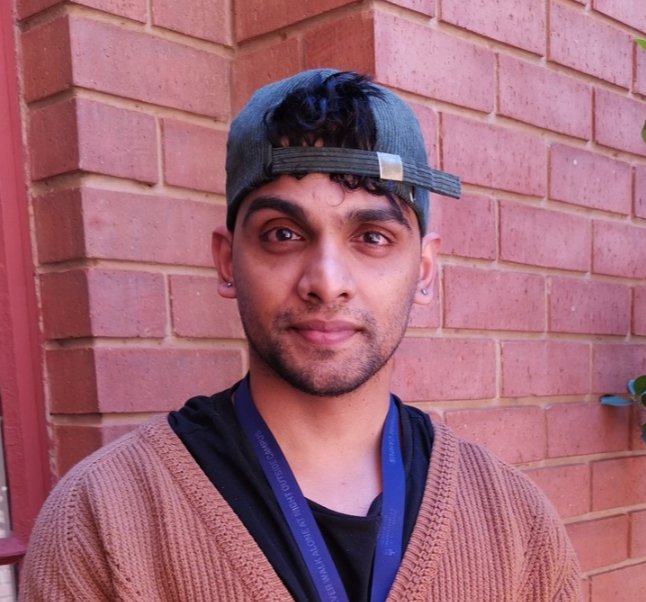
By Sherwyn Naidoo, Friend of TGBP, Intern Counselling Psychologist.

In South African cities like Johannesburg, memories of exclusion become etched in space. Space quietly tells people who belongs and who does not. Fences rise higher, benches disappear, security guards patrol public spaces, and gates remain locked. Access to the city is bought by affording a seat at the metaphorical business table historically built through the blood of the descendants now excluded. Entire parts of the city are designed to move some people through quickly while allowing others to settle comfortably and safely.
For people who are unhoused, the city often communicates the message: you are not welcome at this table.
This exclusion is not new in South Africa. The way space operates today carries the long shadow of colonialism and apartheid. Although apartheid officially ended, many of its divisions still live on through economic inequality, racialised poverty, and urban design. Wealth, safety, comfort, and mobility still largely follow classed and racial lines. Some bodies are protected and accommodated by the city, while others are treated as suspicious, disposable, or out of place. In many ways, apartheid did not disappear entirely; it adapted itself into modern capitalist systems that continue to separate people through intersecting race and class realities.
...some bodies are protected and accommodated by the city, while others are treated as suspicious, disposable or out of place.
This is the context in which The Green Bag Project (TGBP) bore the idea of collaboratively designing the movable community table. At first glance, it may seem simple, just a table. But symbolically, this table carries enormous political weight. It is not merely furniture. Rather, it is a refusal to disappear and a disavowing of the message that we need to buy dignity, visibility, and belonging. The table becomes an alternative message where dignity, visibility and belonging ignite through relating and connecting based on a shared humanity.
For many unhoused people, this sense of exclusion from the business table becomes embodied through a life of constant waiting. Many of the unhoused standby waiting for housing, work, systems to respond, and waiting to be treated as fully human again. This waiting can last years and temporary suffering, endured through an almost cruel false hope, slowly becomes permanent. Yet the collaborative creation of the community table seeks to symbolically interrupt this condition of silent waiting.
Instead of remaining hidden in the margins of the city, we aim to create a table that moves intentionally through public spaces. And wherever it stops, something may shift. People may pause, stare, and become aware of one another again. The table seeks to transform movement itself into a political statement. Normally, and paradoxically encompassed in the entrapment of constant waiting, movement is forced upon unhoused people. They are constantly displaced, removed, chased away, or expected to remain invisible in order to make others already seated at the business table comfortable. But the creation of our community table aims to reclaim movement as agency rather than exclusion. Its intentional movement and placement around the city says: We have the right to exist visibly within this city too and we do not need your table to have a seat. This matters deeply in a post-apartheid society where public space has historically been controlled through exclusion through race and power, and currently through economic segregation.

The community table aims to quietly confront these realities. It disrupts the social habits that our urban reality teaches us, especially the habit of looking away. Currently, many people move through cities protecting themselves emotionally from the harsh reality of this intersecting economic/racial divide. We avoid eye contact at robots, stare at our phones, and pretend not to notice suffering. This avoidance is an understandable and relatable defence because truly noticing it can feel painful and overwhelming. Over time, this avoidance becomes normal but distances us from each other’s humanity.
"Ubuntu teaches us that a person becomes fully human through relationship with others, I am because we are."
But the table seeks to interrupt that normality. It creates a shared space where unhoused and housed people sit together face to face. Not as “charity cases” and “saviours.” Not as “dangerous people” and “respectable citizens.” Simply as human beings sharing food, conversation, silence, laughter, and presence. And this is where the project becomes deeply radical. It is not begging dominant systems for inclusion. It is creating a new kind of social space altogether, one rooted in Ubuntu, mutual recognition, and shared humanity.
Ubuntu teaches us that a person becomes fully human through relationship with others, I am because you are. In a society fractured by inequality, fear, and historical violence, both exclusion and avoidance wound the social fabric. The person sleeping on the pavement is dehumanised through neglect, but the person who learns to constantly look away is also shaped by that disconnection. The movable table offers another possibility. It becomes a place where people can reconnect with parts of themselves that modern urban life often suppresses: compassion, vulnerability, curiosity, accountability, and collective care.
This is why the project matters politically. The table challenges the idea that cities belong only to those with money, property, security, and social status. It refuses the belief that some lives should remain hidden in the background of economic progress. Importantly, it spatially exposes how deeply apartheid’s spatial and psychological divisions still live within democratic South Africa while simultaneously provides us a space to build new narratives of belonging. The table and the acts around the table remind us that liberation cannot only exist in laws or policy documents; but rather comes alive and exist in everyday human encounters.
The patrons of TGBP are not simply asking society to make room for them. Through this project, they are actively reshaping what belonging itself can mean in South Africa. The movable table becomes a political act that publicly declares dignity, reclaims space, and perhaps most importantly, invites all of us to sit down together and begin re-imagining a society where humanity is no longer organised according to fear, class, race, and exclusion, but according to our willingness to truly see one another again.


Comments